
Last updated November 22, 2026
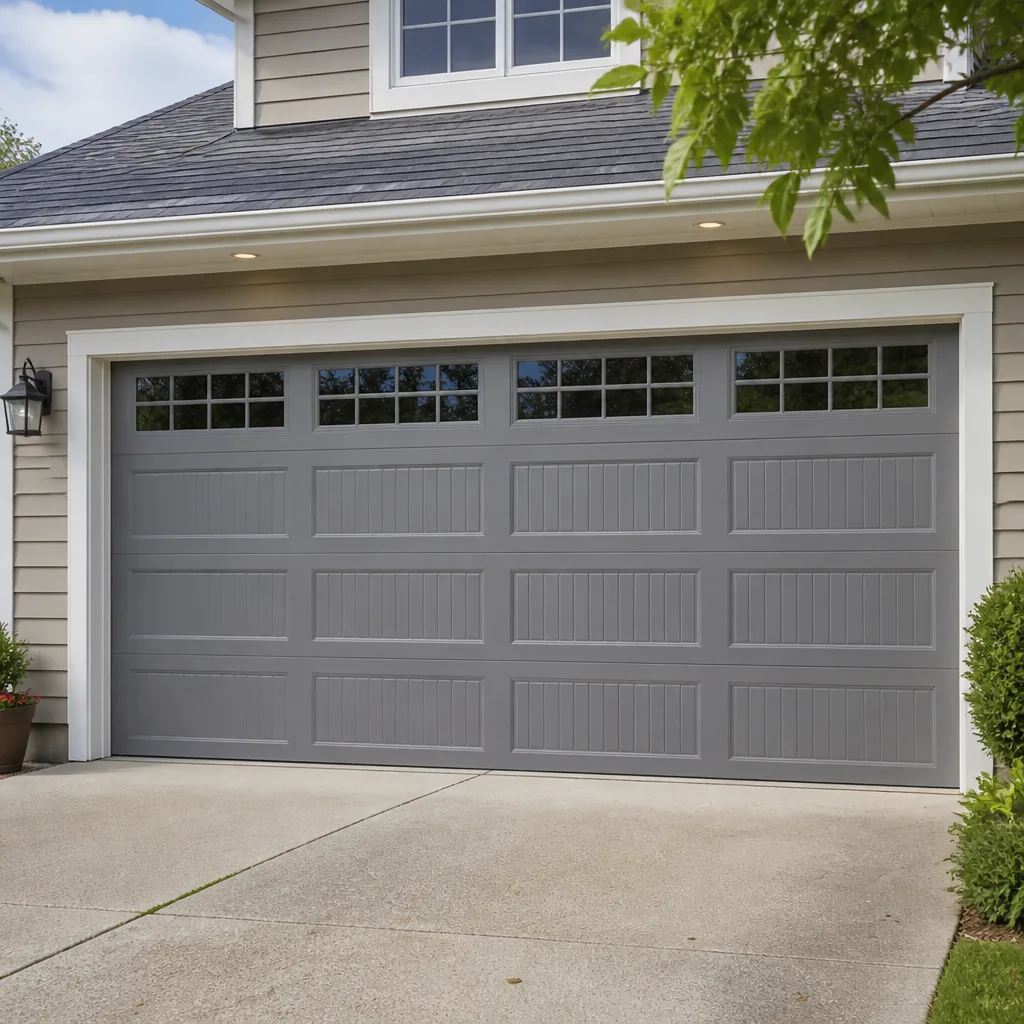 Raised-panel steel
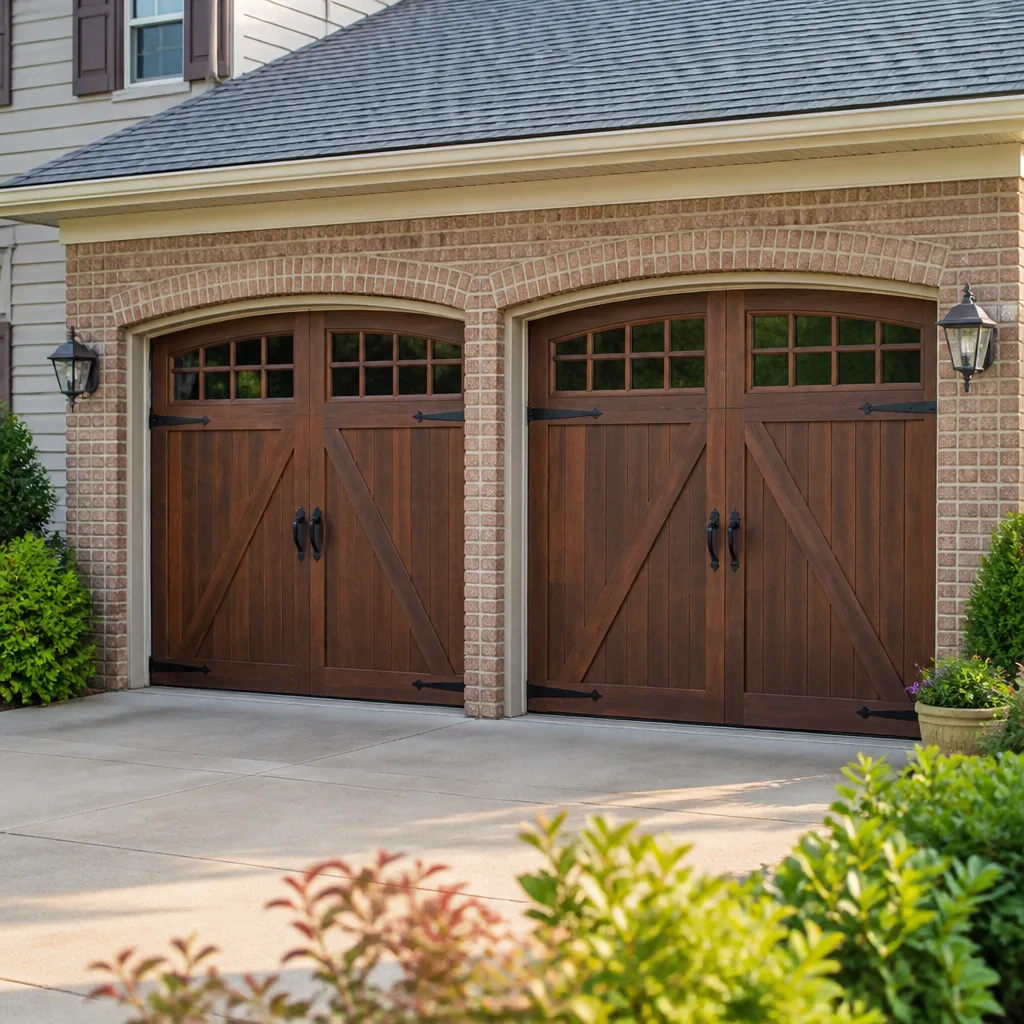 Carriage house
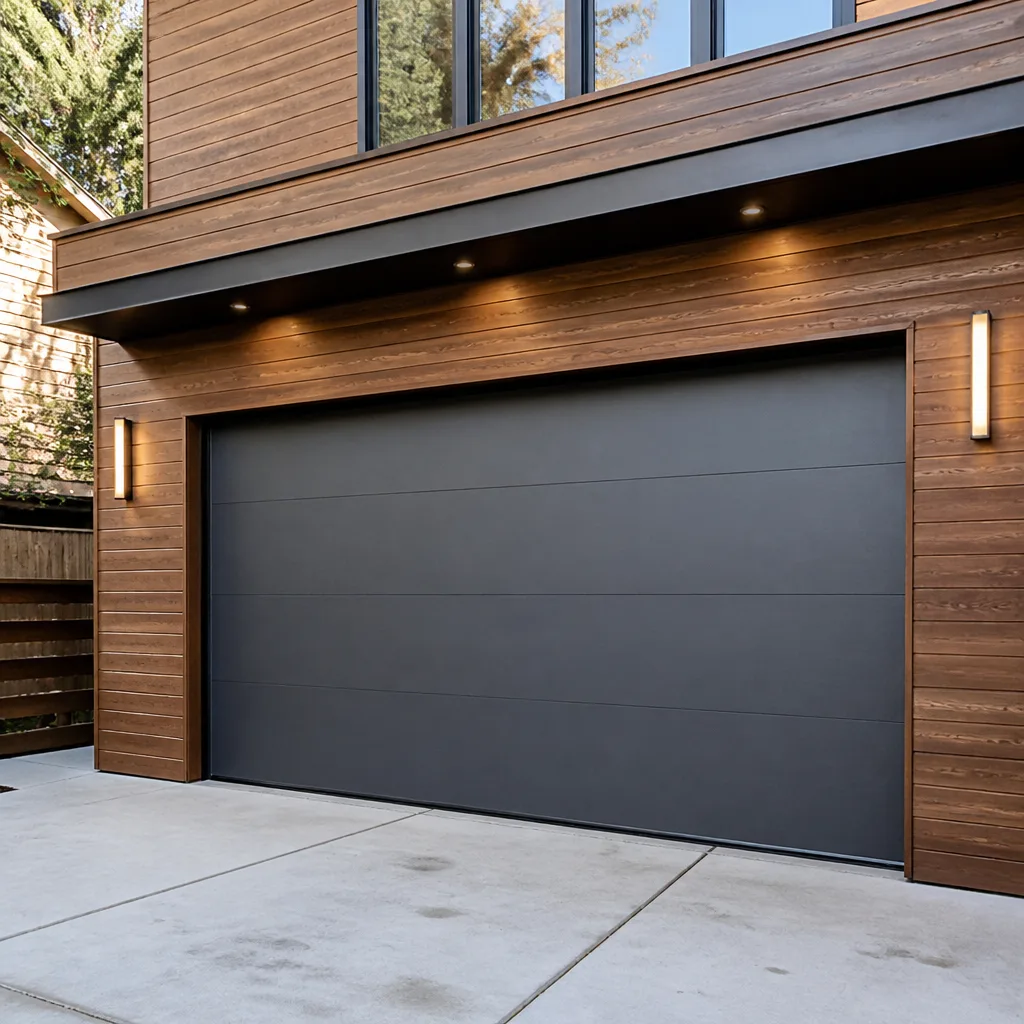 Modern flush
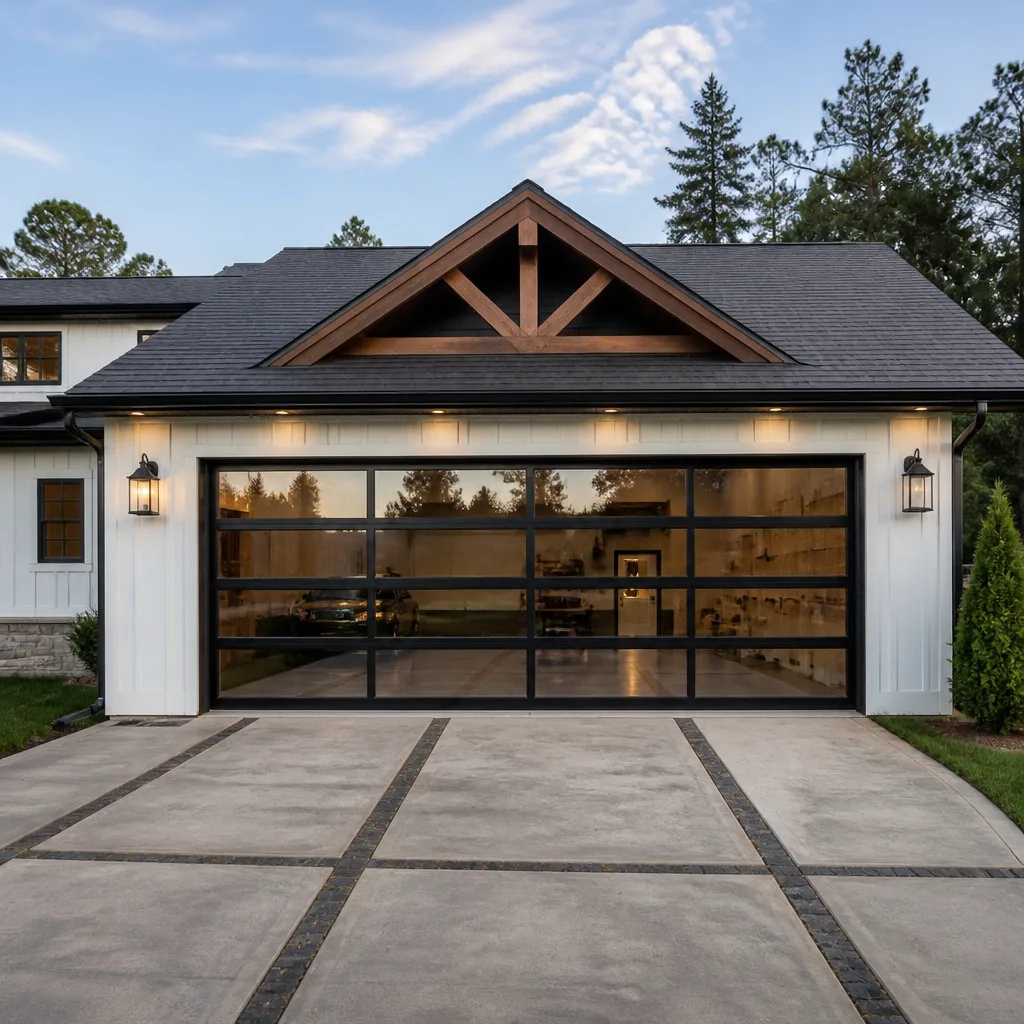 Full-view glass
 LiftMaster openers
 Chamberlain openers
Full 25-point door and opener safety check with every visit - springs, cables, rollers, tracks, and your LiftMaster or Chamberlain opener included
You get a price before we start. It does not change when the pro arrives.
Get your free estimateGarage Door Warning Signs: A Como Homeowner’s Reference Guide
Most garage door problems don’t announce themselves with a bang. They whisper first – a hesitation before the door drops, a grind that wasn’t there last month, a cable that looks a little fuzzy in the afternoon light. Homeowners in Como tend to file these under “getting old” and move on with their day. That filing system is how a two-minute adjustment turns into a door that drops without warning. Here’s the thing worth holding onto: almost every garage door warning sign is mechanical and specific. It points at an actual part. This guide maps the signs to their causes so you know what’s talking to you, and whether you should stop using the door today or book a repair this week.
Quick Answer
The main garage door warning signs are grinding, popping or scraping noises, a door that lifts unevenly or sags on one side, a cable that looks frayed rather than just dirty, and a door that no longer reverses when it meets an object. Some of these mean stop using the door immediately – anything involving a broken spring, a snapped or badly frayed cable, or a failed auto-reverse test. Others, like a slow opener or a noisy roller, can wait a few days for a scheduled repair.
Styles & brands we work with
- Raised-panel steel
- Carriage house
- Modern flush
- Full-view glass
- LiftMaster openers
- Chamberlain openers
Table of Contents
- What Do the Noises Coming From Your Garage Door Actually Mean?
- How Do You Tell a Fraying Cable From a Dirty One?
- How Should Your Door Move? Reading Uneven Lift, Sagging and Slow Descent
- Which Warning Signs Mean Stop Using the Door Today?
- How Do You Test Your Door’s Auto-Reverse Safety Feature?
- Which Warning Signs Point to the Opener Rather Than the Door?
- What Makes Garage Door Wear Different in Como?
- When to Repair Now and When to Replace
What Do the Noises Coming From Your Garage Door Actually Mean?
Every garage door noise has a mechanical source, and the sound tells you which part is struggling. Grinding usually means metal is rubbing where it shouldn’t – worn rollers or a dry hinge. Popping is more serious. It often points to a spring that’s losing tension or a torsion tube that’s slipped. Scraping is a door panel catching the frame because the door is off its track or the hinges have bent. Rattling that’s new is usually a loose bolt or a top bracket that’s working itself free.
Here’s a reference list you can read against the door you’re standing under:
- Grinding on the way up or down: dry or worn nylon rollers, or a hinge pin that’s seized.
- Loud popping or a bang followed by a door that won’t lift: a broken torsion or extension spring. Stop using the door.
- Scraping against the frame: a bent track, a warped panel, or loose hinges pulling the door out of square.
- Rattling or ticking at the top: a loose bracket or bolt. Tighten nothing yourself on a torsion system – call it in.
- Squealing that rises with speed: the opener’s gear or chain running dry, or a bearing wearing out.
In our experience, the noise a homeowner describes on the phone narrows down the repair before we arrive. That’s not a trick – it’s how mechanical the trade is. A grinding LiftMaster door and a popping Raynor door are giving you two different messages, and they need two different responses. A grinding roller is a scheduled repair. A popping spring is a stop-now call. When the sound is a pop or a bang, that’s the point to put the phone down and pick it up again to call garage door repair rather than try to lift the door to check.
How Do You Tell a Fraying Cable From a Dirty One?
A dirty cable is a cosmetic issue. A fraying cable is a load-bearing failure in progress. The visual difference matters because both can look “old” from a few feet away, and only one of them is a hazard. Look close, with the door closed and the opener disconnected. A dirty cable is dark and even along its length. A fraying cable has individual wire strands sticking out from the braid, like a rope that’s come apart at the end. Sometimes you’ll see a curl or a bird’s nest of wire at the drum. That’s a cable that’s already failing.
Why the distinction matters immediately: a garage door cable holds hundreds of pounds of spring tension. It is not a component you inspect casually by pulling on it. If you see strands, do not touch the cable and do not run the door. A frayed cable can snap without warning, and when it does, the door drops on one side. That’s the situation where the door should stay put and a trained technician should be the next person to touch it.
Two other quick visual checks you can do safely from the ground:
- Cable drums: look at the drum at each end of the torsion tube. If the cable is wrapped unevenly or has jumped the groove, that’s a sign the door is out of balance and the cable is at risk.
- Bottom brackets: look at where the cable attaches at the bottom of the door. If the bracket is bent or the cable is kinked at the connection, the door has been running with uneven load.
If either of those looks off, the right move is a call. We handle cable and spring work as a dedicated service because it’s the highest-risk repair on the door, and generalists avoid it for good reason.
How Should Your Door Move? Reading Uneven Lift, Sagging and Slow Descent
A healthy door lifts smoothly, at an even pace, and stays parallel to the floor on the way up. It doesn’t stall halfway. It doesn’t tilt. It doesn’t drop faster than it rises. Any of those three failures points to a specific cause, and the cause tells you whether it’s a today problem or a this-week problem.
- Uneven lift or sagging on one side: one spring is carrying more load than the other. On a two-spring torsion system, a single failing spring will make the door lift crooked and drift to one side. This is a spring problem and needs a specialist.
- Slow, labored descent: usually the opener straining against a door that’s out of balance, or a torsion spring that’s lost tension. If the door also feels heavy when you lift it by hand (with the opener disconnected), the spring is the suspect.
- Door stops halfway and reverses: safety sensors or a binding track. If it reverses for no visible reason, the sensors are the first check.
- Door drifts back down after you lift it: the spring tension is too low. The door should hold itself open at mid-travel if the springs are right.
The two-second hesitation before closing that many Como homeowners describe is almost always one of two things: a photo-eye sensor that’s slightly out of alignment, or a spring that’s lost enough tension to make the door labor at the top of travel. It is not “the door getting old.” It’s a symptom with a cause, and if it goes unaddressed, the next stage is a door that drops without triggering the reversal. That’s why we treat a hesitate as a real warning sign and not background noise.
Which Warning Signs Mean Stop Using the Door Today?
Some signs are “book a repair.” A handful are “stop using the door and call today.” The distinction is simple: if a single failure could drop the door on someone or send spring tension loose, that’s a stop sign. If the worst outcome is a stuck door and a rescheduled morning, it can wait for a scheduled repair.
Stop using the door today if you see or hear:
- A bang or pop followed by a door that won’t lift. This is a broken spring. Never force the opener.
- A visibly frayed or kinked cable. Strands sticking out means the cable is close to failing.
- A door that drops at speed or free-falls. The balance system has failed.
- A door that closes on an object without reversing. The safety system has failed – see the auto-reverse test below.
- A door off its track. Running it again can bend panels or drop the door.
- A torsion tube or spring that looks visibly bent, cracked or coiled wrong. Do not touch it.
Anything on that list means the door is a hazard, not a convenience. Keep it in the down position if you can, clear the area, and call. That’s the emergency situation, and it’s the reason we run emergency service as a core offering rather than an add-on.
What can safely wait a few days
Grinding or squealing from the rollers, a slow opener, rattling hinges, a remote that only works from close, and a door that’s louder than it used to be. These are real warnings, and left alone they’ll accelerate wear, but they won’t hurt anyone tonight. Book them into the week and keep using the door normally.
How Do You Test Your Door’s Auto-Reverse Safety Feature?
Your garage door is required to reverse when it meets an object. That’s the UL 325 standard for automatic garage door operators, and it’s the single most important safety test you can run yourself. It takes about a minute and it’s the test most homeowners have never done. The result tells you whether your door protects a child, a pet, or a bicycle left in the path – or whether it doesn’t.
Here’s the two-part test:
- The photo-eye test. With the door open, wave a long object – a broom handle works – across the doorway between the two sensors mounted at the bottom of the track. The door should reverse immediately. If it doesn’t, the sensors are misaligned, dirty, or failing.
- The contact-reversal test. Place a solid object about the height of a shoe box (a roll of paper towels works) flat on the floor in the door’s path. Close the door with the opener. When the door strikes the object, it should reverse within a second or two of contact. If it keeps pressing, the force setting is too high.
A failure here is not a mechanical annoyance. It’s a safety failure. A door that doesn’t reverse is a door that can trap a person, and the fix is either a sensor replacement or a force-limit adjustment on the opener – a job for a technician who services your brand. Whether you’re running a Craftsman opener or something more recent, the test is the same and the standard is the same. If yours fails, don’t wait for the next repair to mention it. Call garage door opener repair and get it corrected, because a door that’s convenient but won’t reverse is a bigger liability than a door that’s stuck.
Which Warning Signs Point to the Opener Rather Than the Door?
Half the “my door is broken” calls we get in Como are opener problems, not door problems. The symptoms are different if you know what to look for. The door itself is a counterbalanced mechanical system. The opener is the electric drive that pushes it. When the opener fails, the door usually isn’t the problem – but it’s the thing that stops moving, which is why the two get confused.
Opener warning signs:
- The opener runs but the door doesn’t move: a stripped gear, a broken drive belt or chain, or a disconnected carriage.
- The opener clicks once and the door doesn’t move: a capacitor or logic board failure.
- The remote works only up close: a tired battery, an antenna wire, or a logic board going.
- The door reverses on closing for no reason: sensor alignment, most often, or a travel limit that needs adjusting.
- Lights flash and the door doesn’t respond: a sensor fault the opener is reporting.
Door warning signs:
- The door lifts crooked or drifts to one side: spring imbalance.
- Grinding, popping or scraping: roller, hinge or spring.
- The door feels heavy when you lift it by hand: spring tension loss.
- The door comes off the track: bent track, worn roller or panel damage.
We work on the major opener brands – LiftMaster and Chamberlain included – so the fix usually doesn’t require swapping out a working opener just to get service. When the door’s movement is the problem, the work is on the door. Check the brand image on the opener motor housing before you call; it saves time on our end.
What Makes Garage Door Wear Different in Como?
Minnesota’s freeze-thaw cycle is the single biggest factor in garage door wear here, and it hits harder than it does in milder climates. Temperatures that swing from well below freezing to thawing and back put metal through repeated expansion and contraction. Springs lose tension faster. Grease in hinges and rollers stiffens in the cold, then loosens in the thaw. Cables that were fine in October can feel brittle in February. Add in the road grit that gets tracked into garages during the long winter, and you get a door that’s working harder than the same door would in a warmer place.
What that means in practice for a Como homeowner:
- Check springs and cables twice: once before winter and once in early spring. The two temperature transitions are when failures cluster.
- Listen for the first grind of the season. Cold-stiffened rollers are the most common cold-weather complaint we hear.
- Watch for a door that hesitates on the coldest mornings. A spring that’s marginal in summer can fail in January.
- Clear the bottom track of winter grit. Track debris is the top cause of a door that starts to grind on one side and feels “off.”
Cold weather is also when the auto-reverse test is most worth running. A sensor that’s marginally out of alignment will often still work in summer and fail in the cold. Test it in January, not just in June.
When to Repair Now and When to Replace
The decision between repair and replacement is more mechanical than most homeowners expect. A single broken spring on a door in otherwise good condition is a repair. A door with a bent track, warped panels, and a failing opener is often a replacement conversation. The signs that point to replacement are cumulative, not single events.
Signs repair is the right call:
- One broken spring, one worn roller, one frayed cable – pieces, not the whole system.
- Door panels are straight and the track isn’t bent.
- The opener is one you’re happy with (a LiftMaster or Chamberlain still working well).
- Grinding or popping started recently and hasn’t been ignored for years.
Signs replacement is worth pricing:
- Panels are warped from moisture, or rust has moved past surface spots.
- The track is bent in more than one place, or the door has come off twice.
- Springs and cables have both been replaced within a few years and the door is still noisy.
- You want an insulated door and the current one isn’t – a common Como request given the winters.
When replacement is the answer, garage door installation is a scheduled project, not a same-day one. We measure, order and install to fit, so the price is agreed before any work starts. If you’re unsure which side of the line you’re on, a free estimate gives you a straight answer either way. We also handle the broader Garage Door Repair Como work when the answer is “fix what’s there.”
Common Mistakes to Avoid
- Running a door with a broken spring “just to see.” A broken spring means the door’s weight is being held only by the opener. Running it can strip the opener gear and drop the door. Stop using it and call.
- Assuming a noisy door is just “getting old.” Grinding, popping and squealing are specific warnings, and each one points at a part. Treating them as background noise is how a $200 repair becomes a $900 one.
- Lubricating a frayed cable or a torsion spring. Grease on a frayed cable hides the failure. Never put anything on a spring or cable you can see failing – that’s the stop-and-call scenario.
- Adjusting the force limit to fix a door that reverses for no reason. Turning up the force makes the door close over an object, which defeats the safety system. Fix the sensor or the balance instead.
- Skipping the auto-reverse test because “it worked last year.” Sensors drift in Minnesota cold. Test it twice a year, especially before winter.
- Hiring a handyman for spring work. Torsion springs and cables are the highest-risk repair on a door. A generalist may not carry the tools or the training for your brand.
- Replacing an opener when the door is the problem. Uneven lift and crooked travel are door and spring issues. Buying a new opener won’t fix either, and it wastes a working unit.
See the difference
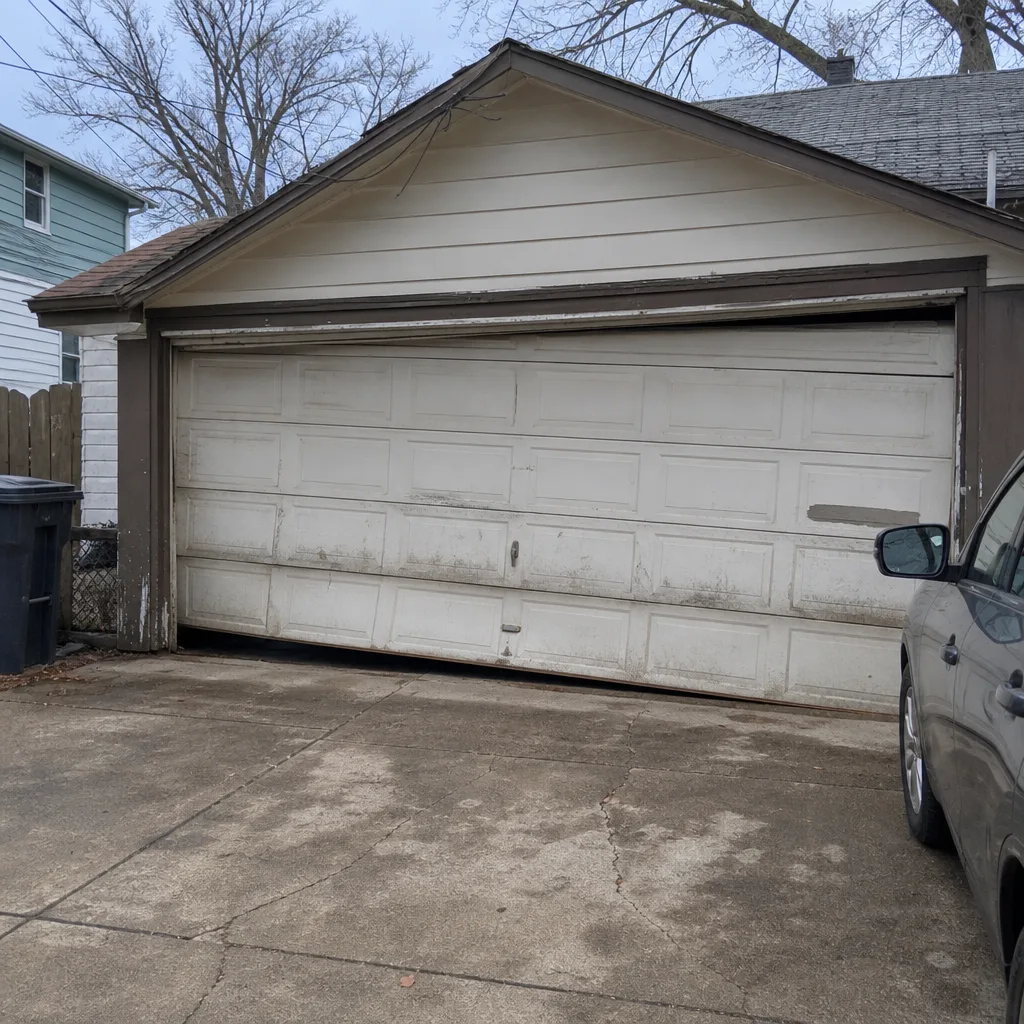 Before
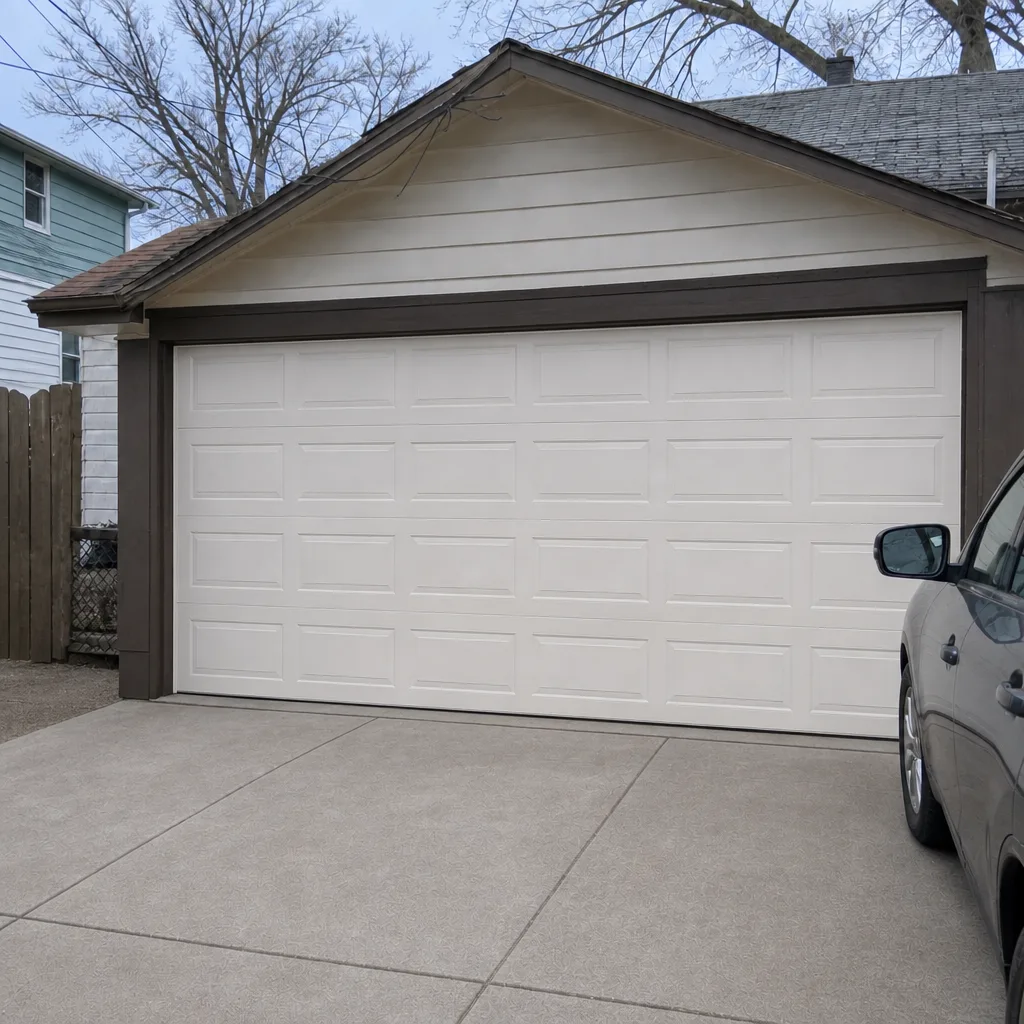 After
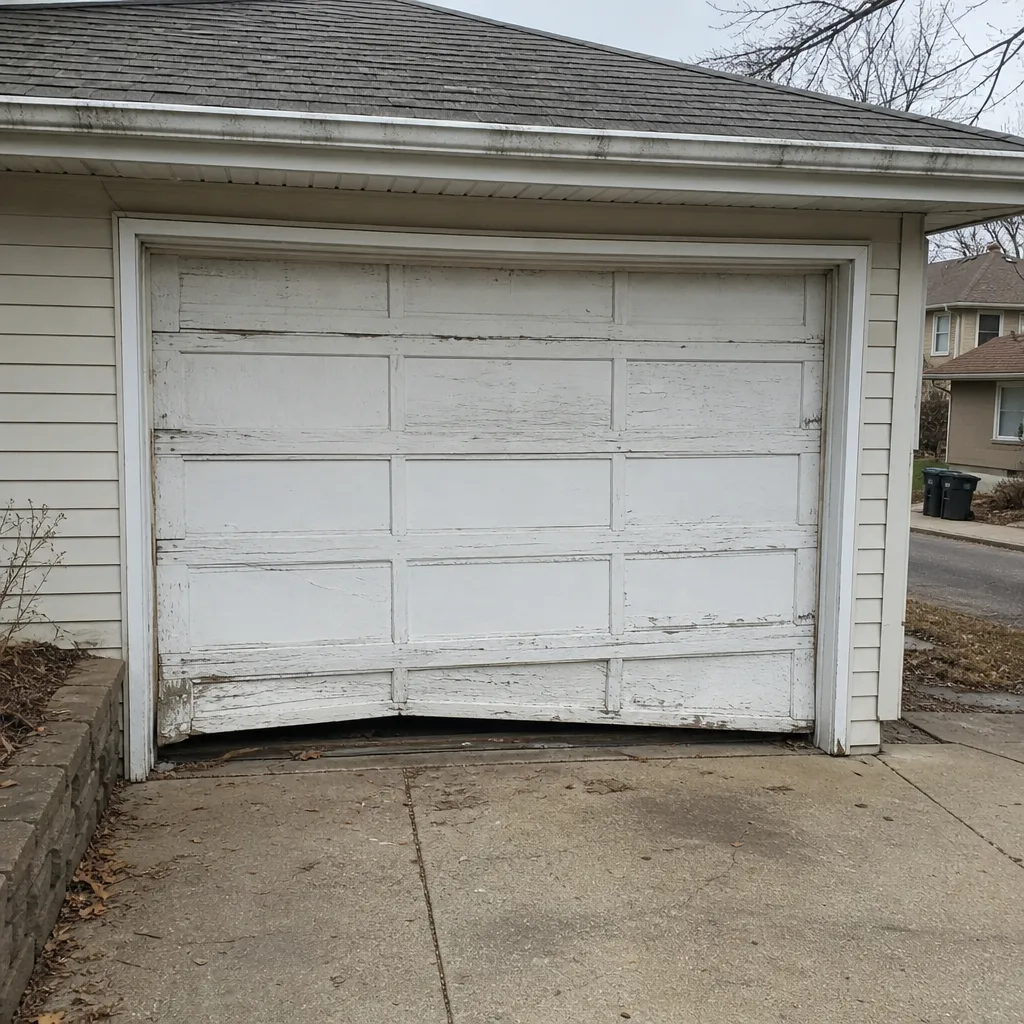 Before
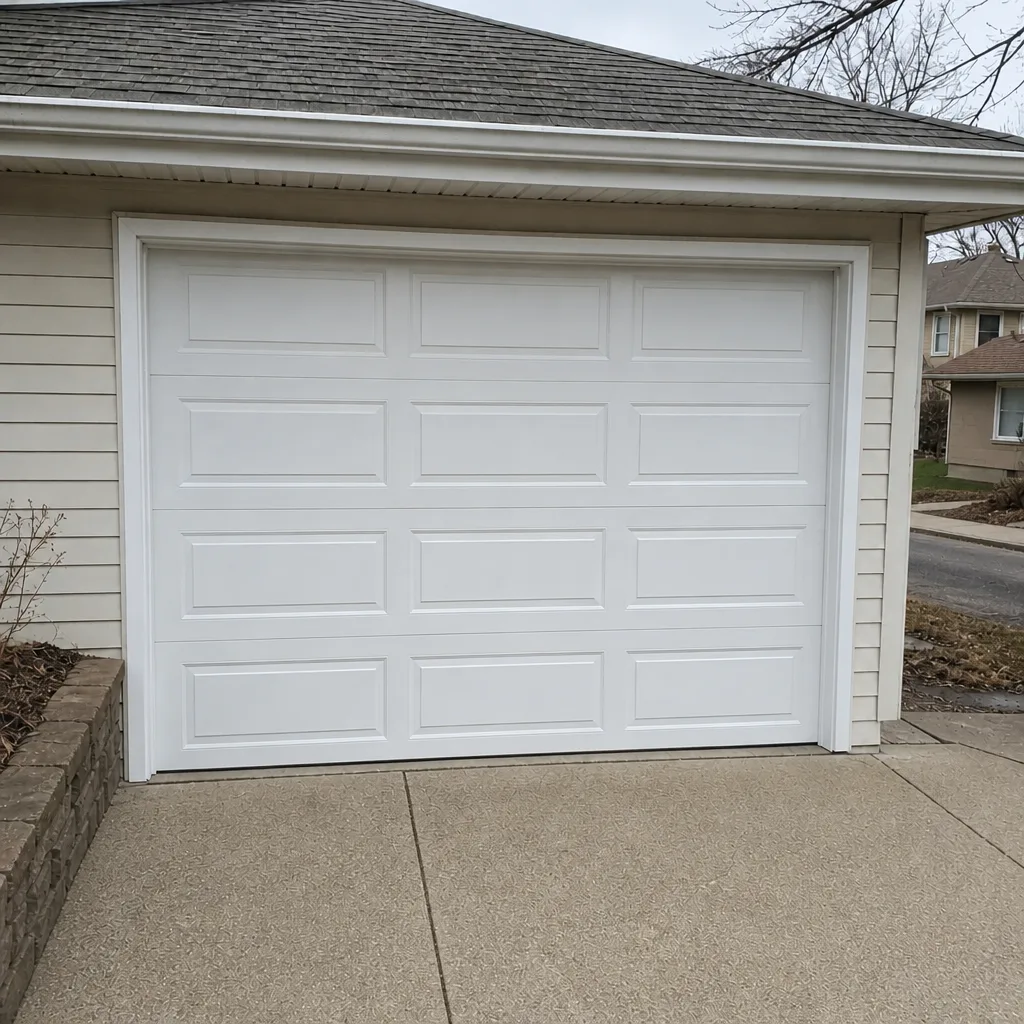 After
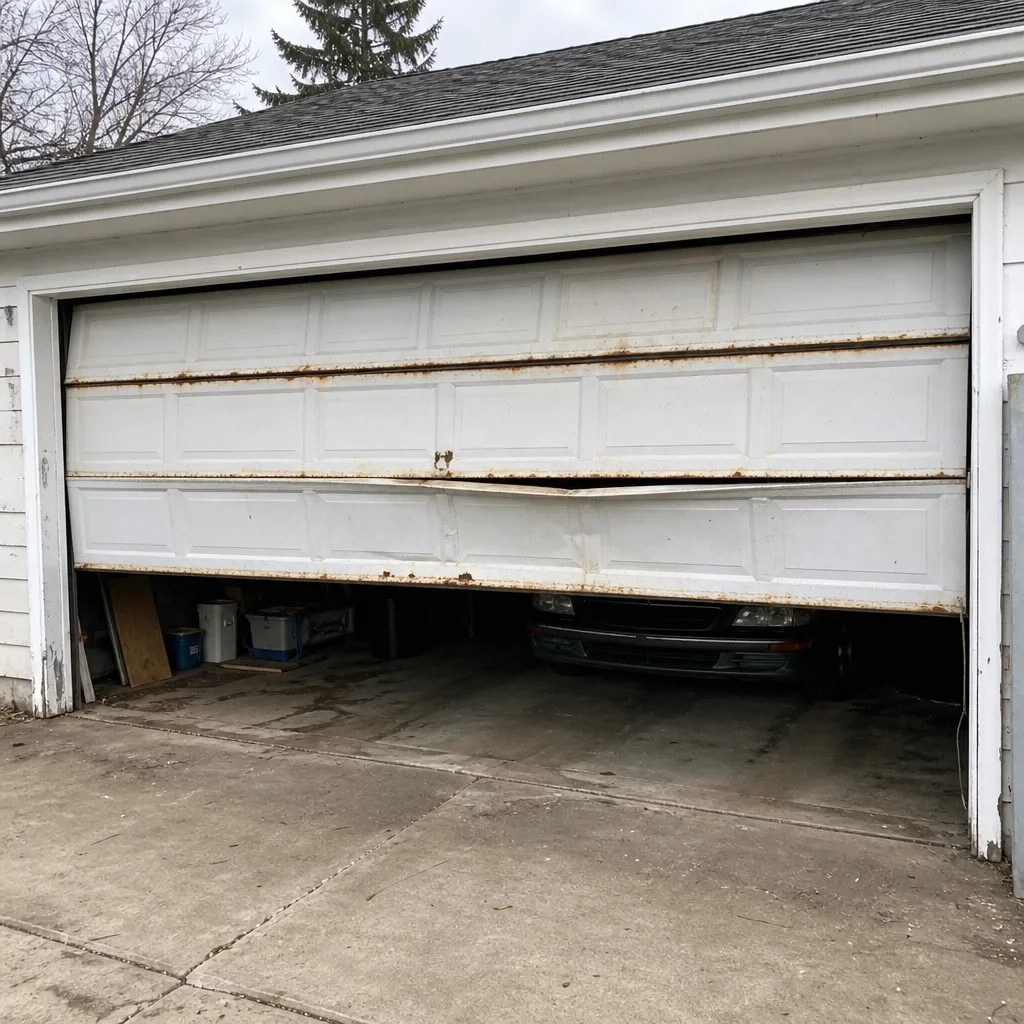 Before
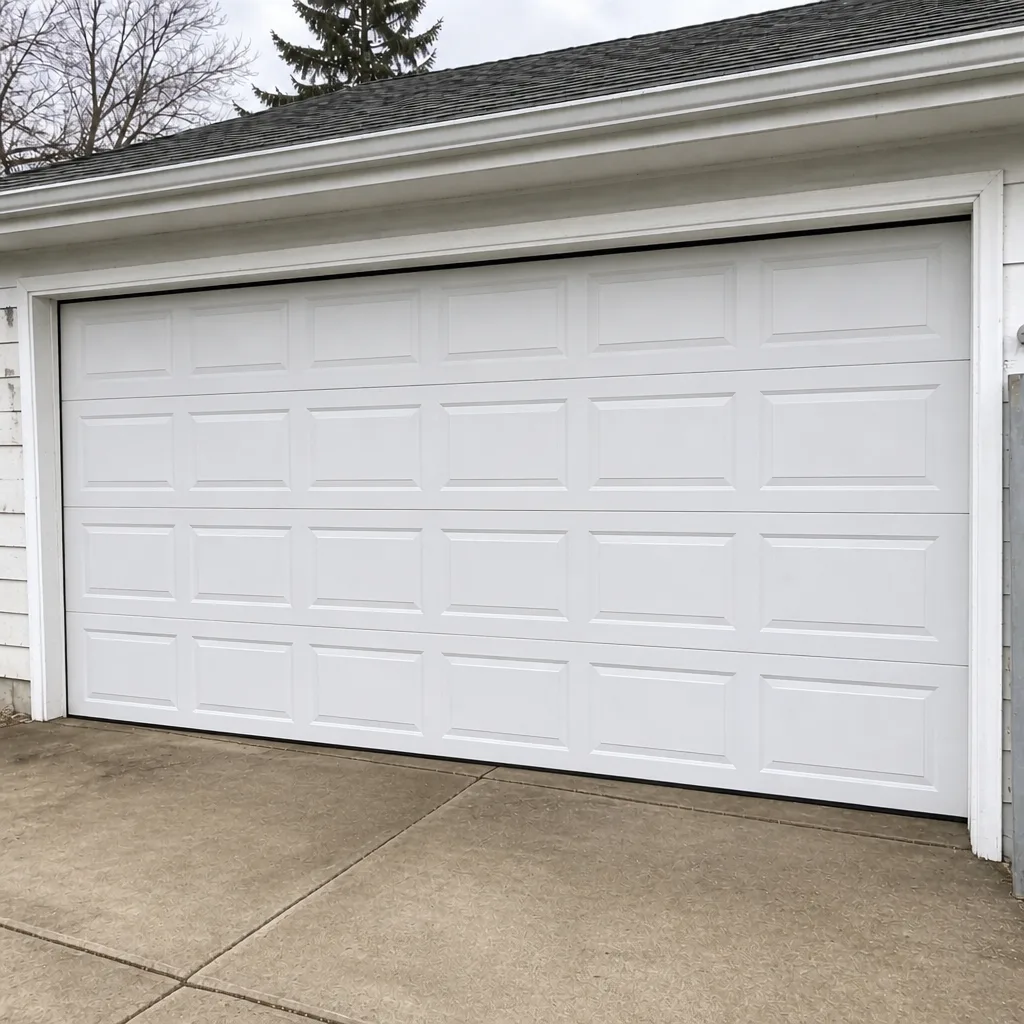 After
When to Call a Professional
Call us when any warning sign involves a spring, a cable, or the door’s ability to reverse. Those are the cases where the risk is real and the fix needs training, not a tool kit. Call us also when a door has been grinding for more than a week, when the door lifts crooked, or when the opener fails in ways you can’t clearly diagnose. Our technicians have up to 11 years of experience and service eight major brands – LiftMaster, Chamberlain, Genie, Clopay, Amarr, Wayne Dalton, Craftsman and Raynor – so a branded system doesn’t have to be replaced just to get service. Garage Door Repair Como offers free estimates in Como – call (855) 514-8247. We answer 24/7. Fast dispatch from 7am to 7pm, Sunday through Friday.
Frequently Asked Questions
Grinding or squealing from the rollers is the most common warning sign we hear from Como homeowners, especially on the first cold mornings of the season. Cold-stiffened grease in the rollers and hinges is usually the cause. It’s a minor repair when caught early and a roller or hinge replacement when it isn’t. Call (855) 514-8247 for an exact quote – estimates are free.
Most garage door repairs in Como fall in a range that depends entirely on the part – a roller or hinge replacement is a small job, a spring replacement is a larger one because the springs are the most dangerous component on the door. We quote before any work starts, and the written estimate is the final price. There’s no charge for the estimate. Call (855) 514-8247 for a quote on your specific door.
Often yes. A door that won’t close is one of the cases we treat as urgent because it leaves your home open. We answer the phone 24/7 and run fast dispatch from 7am to 7pm, Sunday through Friday. Call (855) 514-8247 and we’ll get you the earliest slot that day or the next opening.
No. The price we quote before work starts is the price you pay. We look at the door, name the repair and the cost, and only start once you’ve agreed. If we find something additional, we tell you before we touch it – the written estimate sets the final price. Call (855) 514-8247 for a free estimate.
The local professionals we connect you with are licensed and insured as their state requires, and they’re trained on the brands they service. That matters most on spring and cable work, which is where training shows. Call (855) 514-8247 with the brand on your door and we’ll match the work to the right technician.
Yes, it’s one of the most useful warning signs a Como homeowner can catch early. A hesitation is usually a photo-eye sensor slightly out of alignment or a spring that’s lost tension, and both escalate. Left alone, a marginal spring can fail and drop the door. Catch it now and it’s a small repair. Call (855) 514-8247 for a free estimate.
The Bottom Line
Garage door warning signs are mechanical and specific, not vague and “getting old.” A grind points at rollers, a pop points at a spring, a sag points at balance, and a failed auto-reverse test points at safety. The most useful skill a Como homeowner can build is the difference between “fix this week” and “stop today” – and the auto-reverse test is the single check worth running twice a year. If you can’t tell which side of the line you’re on, call. The estimate is free, the price is set before work starts, and the fix is usually smaller than it sounds.
Written by the team at Garage Door Repair Como.
Call (855) 514-8247 for a free estimate. We answer 24/7. Fast dispatch from 7am to 7pm, Sunday through Friday.